
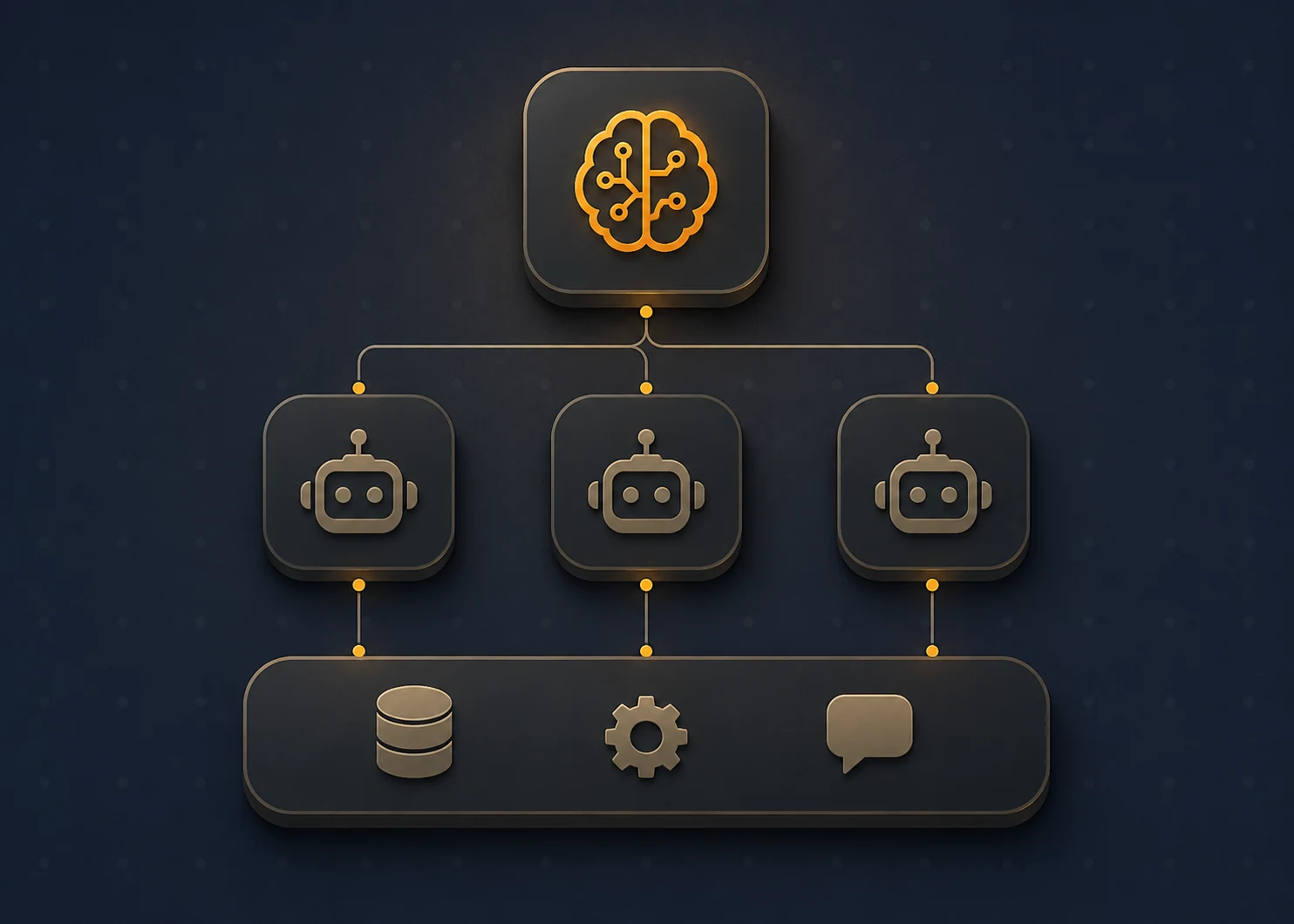
This guide breaks down the core components of multi-agent system architecture, walks through how a request moves through a multi-agent workflow, compares common production architecture patterns, and explains how to choose the right structure for a given task instead of defaulting to the most complex option available.
Key takeaways
- Architecture defines structure; orchestration defines execution and coordination.
- Not every multi-agent system needs a chat interface.
- Agent registries become critical as agent counts grow.
- Partition shared context, don't distribute it universally.
- Architecture patterns trade control, flexibility, latency, and complexity.
- Single agents often outperform poorly designed multi-agent systems.
- Governance and observability matter as much as coordination logic.
What Is Multi-Agent System Architecture?
Multi-agent system architecture is the design framework that defines how multiple specialized AI agents are organized, connected, and governed to complete a shared goal. It specifies which agent handles which task, how agents pass information to one another, and what state or memory persists across the workflow. The architecture also determines where control sits — with a single supervisor, a router, or a distributed group of peers — and how much autonomy each agent has within its boundaries.
Multi-Agent System vs Architecture
A multi-agent system is the set of collaborating agents and supporting infrastructure in action, while multi-agent system architecture is the blueprint that defines how those parts are structured and related.
Architecture vs Orchestration
Architecture describes the structural relationships between components, while orchestration describes how work is actively coordinated and executed across those components at runtime.
Core Components of Multi-Agent System Architecture
Multi-agent system architecture is built from several distinct layers that each handle a specific part of the workflow, from receiving a goal to validating the final output. These layers pass context, state, and control to one another in a defined sequence.
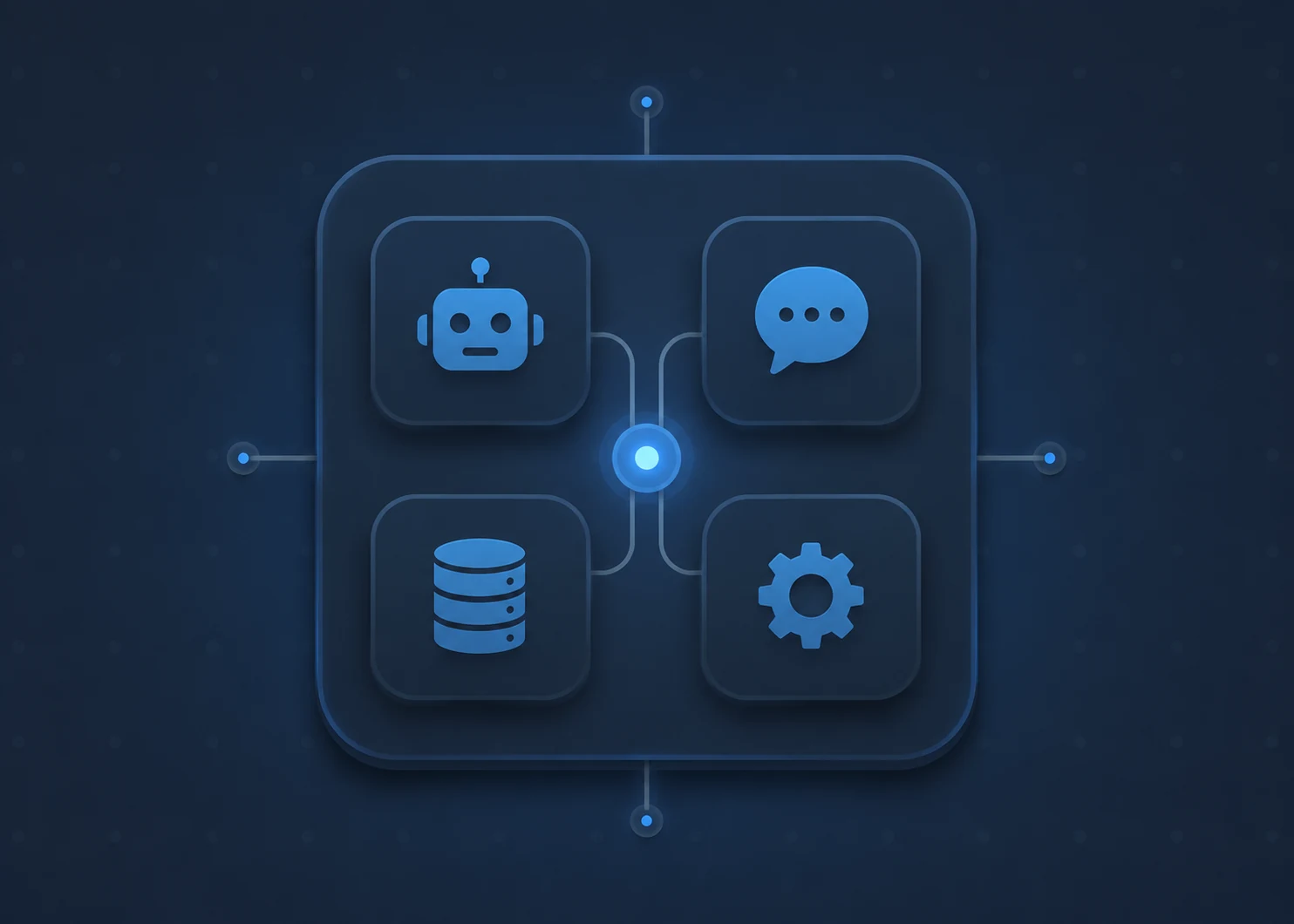
User, Application, or Event Layer
The user, application, or event layer is where a request originates, whether that's a person typing into a chat interface, an application calling an API, or a scheduled job firing on a timer. Multi-agent systems do not require a conversational front end; a webhook, a cron trigger, or another software system can start the workflow just as easily. What matters at this layer is that the incoming request is captured in a structured form the rest of the architecture can act on.
Coordination Layer
The coordination layer decides what should happen next once a goal enters the system, whether that means breaking the goal into subtasks, selecting which agent handles it, or triggering multiple agents at once. This layer can be a single supervisor agent, a lightweight router, or a set of rules embedded in the workflow engine itself. Its main job is to keep the overall task moving toward completion without every agent needing to know about every other agent.
Agent Registry
An agent registry keeps track of which agents exist in the system, along with their capabilities, permissions, and current availability. This becomes increasingly important as agent counts grow, because a coordination layer cannot route work intelligently to agents it doesn't know how to find or trust. Without a registry, adding a tenth or twentieth specialized agent turns into a manual, error-prone process instead of a predictable one.
Specialized Agent Layer
The specialized agent layer contains the agents that actually perform the work, such as research, analysis, writing, or code generation, each scoped to a narrower task than a single general-purpose agent would handle. Narrower scope typically means simpler prompts, more predictable outputs, and easier evaluation for each individual agent. The trade-off is that more specialized agents require more coordination to keep their outputs aligned with the original goal.
Communication Layer
The communication layer defines how agents exchange information, whether through direct messages, a shared message queue, or updates written to a shared state that other agents read. The format matters as much as the mechanism, since agents need structured, predictable message shapes to parse each other's outputs reliably. Poorly defined communication is one of the most common sources of failure in multi-agent workflows, because small format mismatches compound across multiple handoffs.
State and Memory Layer
The state and memory layer tracks two related but different things: workflow state, which records what has happened during the current task, and memory, which persists information for future tasks. Workflow state might include the current step, completed subtasks, and retry counts, while memory might hold user preferences or prior interactions. Separating these concerns prevents a system from confusing "what's happening right now" with "what we've learned over time."
Tool and Integration Layer
The tool and integration layer connects agents to the external systems they need to act on, including web search, internal databases, third-party APIs, and business applications. Each agent typically has access to a defined subset of tools rather than the full toolkit available to the system as a whole. Scoping tool access this way limits the blast radius of a misbehaving agent and keeps permissions aligned with each agent's actual job.
Governance Layer
The governance layer enforces the rules around what agents are allowed to do, including which actions require human approval, which data agents can access, and which operations are irreversible without review. This layer sits above individual agents rather than inside them, so governance rules apply consistently even as agents are added or changed. Strong governance is what makes it possible to give agents real autonomy without losing control over sensitive operations.
Observability and Evaluation Layer
The observability and evaluation layer captures what every agent did, why it did it, and whether the outcome met the original goal, typically through logging, tracing, and structured evaluation checks. This layer doesn't sit at one point in the workflow; it surrounds the entire process so that any step can be inspected after the fact. Without it, diagnosing why a multi-agent workflow produced an incorrect or incomplete result becomes close to impossible.
How Does Multi-Agent Architecture Work?
Multi-agent architecture works by moving a single goal through a defined sequence of layers, each of which adds structure, assigns responsibility, or checks progress. The steps below walk through that sequence using a common example: generating a competitor analysis for a new product.
1A Goal Enters the System
A request enters the system through the user, application, or event layer, for example: "Create a competitor analysis for our new product." At this point the system has a goal but no plan for how to achieve it.
2The Goal Is Broken Into Tasks
The coordination layer breaks the goal into smaller, more specific tasks such as competitor discovery, pricing research, feature analysis, customer review analysis, and report writing. Breaking the goal down this way makes it possible to assign each piece to an agent suited for that specific type of work.
3Work Is Assigned to Agents
Different agents receive different tasks based on their defined specialization, with the coordination layer or router matching each task to the agent best equipped to handle it. This assignment can happen sequentially, in parallel, or through a combination of both, depending on how independent the tasks are.
4Agents Use Their Own Tools
Each agent works using the tools it has been given access to; the research agent may search the web, while the data agent may query internal databases. Because tool access is scoped per agent, no single agent needs or gets access to every system connected to the architecture.
5Agents Exchange Results
As agents complete their tasks, outputs move through structured messages or shared state so other agents and the coordination layer can build on them. This exchange has to follow a predictable format, or downstream agents risk misinterpreting what an upstream agent actually produced.
6Results Are Combined
A supervisor or designated final agent gathers the individual outputs and combines them into a single, coherent response. This step often involves resolving overlaps or contradictions between agent outputs before the final result is assembled.
7The Outcome Is Validated
Before the workflow is marked complete, the system checks whether the original goal was actually achieved, not just whether every agent finished its assigned task. This validation step catches cases where individual steps succeeded but the combined result still misses what the user actually asked for.
Multi-Agent System Architecture Diagram
The diagram below shows how a request flows through coordination, specialized agents, shared state, tools, and governance before reaching a validated outcome.
Recommended Diagram Structure
↓
Planning and Coordination Layer
↓
Agent Router or Supervisor
↓
Specialized Agents: Research · Analysis · Domain · Execution
↓
Shared State + Context Layer
↓
Tools, APIs, Applications, and Data
↓
Validation + Governance
↓
Final Outcome
Important Diagram Detail
Do not show every agent accessing every resource equally. Draw clear boundaries around context, tools, permissions, and memory. Each agent completes its scoped task using only the context, memory, and tools it has been granted — not the full resources of the system.
- Context
- Tools
- Permissions
- Memory
Shared state tracks overall progress so agents and the coordinator stay synchronized without needing constant direct communication. Governance reviews sensitive operations before they execute, and observability tracks the entire workflow end to end.
Common Multi-Agent System Architecture Patterns
Not every multi-agent system should use the same structural pattern, since the right choice depends on how tasks relate to each other and how much control the situation demands.
Centralized / Supervisor
One agent controls the complete workflow, assigning tasks, reviewing outputs, and deciding when the process is finished.
Best for: Enterprise automation, compliance-heavy processes
Hierarchical
Supervisors manage groups of specialist agents, with an executive-level agent coordinating mid-level supervisors.
Best for: Large systems with several domains
Sequential
Agents work in a defined order, with each agent's output becoming the next agent's input.
Best for: Tasks with strong dependencies
Parallel
Several agents work simultaneously on independent pieces of a larger task, with results merged once every branch finishes.
Best for: Independent tasks where speed matters
Router-Based
The system routes each task directly to the right specialist based on its type, content, or intent.
Best for: Customer support, large agent pools
Peer-to-Peer
Agents communicate directly with one another instead of going through a central coordinator.
Best for: Negotiation, collaborative planning
Hybrid
Different patterns operate inside the same system, combining structures where each one fits best.
Best for: Complex enterprise systems
How to Choose the Right Multi-Agent Architecture
Choosing the right multi-agent system architecture starts with the nature of the task, not with how sophisticated a design looks on paper.
Start With One Question: Do You Need Multiple Agents?
Many tasks are handled just as well, and more cheaply, by a single well-scoped agent. Reach for multiple agents only when a task genuinely requires distinct specializations, parallel work, or separated permissions.
Evaluate Task Dependencies
If steps must happen in a specific order, a sequential or hierarchical structure fits better than a parallel one. Independent subtasks are a strong signal for parallel or router-based designs.
Evaluate Control Requirements
High-control environments, like compliance or finance workflows, generally call for a centralized or supervisor architecture. Lower-stakes tasks can tolerate more distributed structures without the same oversight.
Evaluate Agent Count
A handful of agents can often be coordinated informally, but larger agent pools need a registry and often a router to stay manageable. As agent count grows, so does the need for explicit governance and permission boundaries.
Evaluate Permission Boundaries
Agents that touch sensitive data or irreversible actions need tighter, more explicit permission scopes than agents doing read-only research. Architecture should reflect this by isolating high-risk agents rather than giving every agent the same access.
Evaluate Latency
Sequential architectures add up delay across every step, which matters for time-sensitive workflows. Parallel or router-based designs generally deliver faster results when tasks can run independently.
Evaluate Failure Tolerance
Workflows that can tolerate retries and partial failures can use more distributed, flexible architectures. Workflows where failure is costly need stronger validation, ownership rules, and centralized checkpoints.
Agent or Tool?
Not every capability needs to be its own agent; a single function call or API request is often enough. Reserve full agent status for tasks that require judgment, multiple steps, or their own reasoning loop.
Context, Memory, and State in Multi-Agent AI Architecture
Context, memory, and state are often used interchangeably, but they serve distinct purposes inside multi-agent system architecture. Confusing them leads to systems that either forget what matters or hold onto far more than they should.
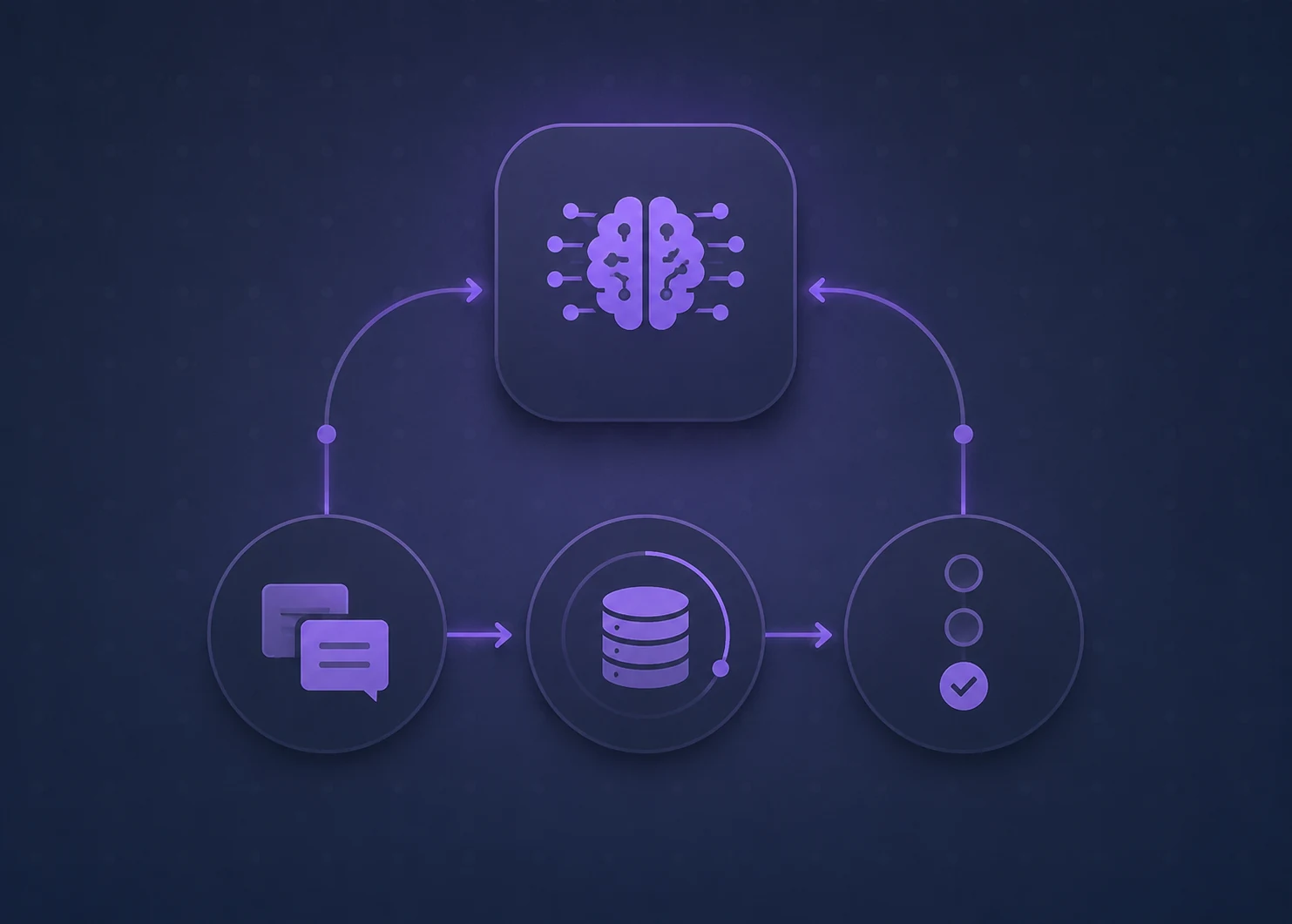
Context
Context is the information required for the current task, scoped to what a specific agent needs to complete its immediate work. It typically includes the user's request, relevant documents, previous agent output, and current instructions. Context is deliberately temporary and task-specific, which keeps individual agent calls focused and efficient.
Workflow State
Workflow state tracks what has happened during the current run of a multi-agent process, independent of what any individual agent remembers. State may contain the current step, completed tasks, agent ownership, dependencies, retry count, approval status, and any errors encountered along the way. Because state reflects an in-progress workflow, it typically gets discarded or archived once the task completes.
Memory
Memory is information retained for future use, extending beyond the current task to inform how agents behave over time. Examples include user preferences, previous interactions, organizational knowledge, and patterns an agent has learned from past runs. Unlike context or state, memory is meant to persist across many separate workflows, not just the current one.
Why Agents Should Not Share Everything
Giving every agent complete access to context, memory, and state might look simpler, but it introduces real problems. Unrestricted access can cause token waste, data leakage, context confusion, conflicting instructions, and poor specialization — since agents end up reasoning over information they don't actually need.
Context Partitioning
Context partitioning means giving each agent only what it needs to complete its specific task, rather than the full shared context available to the system. This keeps individual agent reasoning focused and reduces the chance that irrelevant information leads to an off-target output. It also limits how much sensitive information any single agent is exposed to at once.
Preventing Stale State
Stale state occurs when agents act on outdated information because state changed elsewhere in the system without their knowledge. Preventing it typically involves version numbers, timestamps, conflict detection, locks, and explicit state validation before an agent acts on what it's reading.
Treat Memory as a Permissioned Resource
Memory should be treated as a permissioned resource, not a shared pool every agent can read or write to freely. Different agents should have different memory access based on their role, with sensitive memory restricted to the agents that genuinely need it.
Common Failure Modes in Multi-Agent System Architecture
Multi-agent systems fail in patterns that are recognizable once you know what to look for, and most of these failures trace back to a specific architectural gap.
Conclusion
- Multi-agent system architecture defines how agents, coordination, communication, state, tools, and governance fit together — not just how many agents a system uses.
- Treat architecture and orchestration as related but separate concerns: one is structural, the other is execution.
- Build from clear layers rather than one large, undifferentiated system.
- Choose an architecture pattern based on task dependencies, control requirements, and failure tolerance — not on which pattern looks most sophisticated.
- Partition context and permission memory by role to avoid token waste, data leakage, and conflicting instructions.
- Design for known failure modes before they show up in production.
- A single, well-scoped agent is still the right choice for many tasks; add agents only when the problem genuinely calls for it.
Frequently Asked Questions
What are the main components of a multi-agent system?
A multi-agent system typically includes a coordination layer, an agent registry, specialized agents, communication channels, shared state, tools, governance, and observability. Each component plays a distinct role, and weak design in any single layer tends to affect the reliability of the entire system.
How do multiple AI agents work together?
AI agents work together by receiving a shared goal, dividing it into tasks, and exchanging results through defined communication channels. A coordinator or router typically manages who does what, while shared state keeps everyone aligned on overall progress.
What are the main multi-agent architecture patterns?
The main patterns include centralized, hierarchical, sequential, parallel, router-based, peer-to-peer, and hybrid designs, each suited to different task types. The right pattern depends on task dependencies, required control, and how much flexibility the workflow can tolerate.
Where should shared memory live?
Shared memory should live in a dedicated, permissioned store, with read and write access scoped to each agent's specific role and responsibility. Centralizing it this way avoids the duplication and conflicts that come from letting each agent keep its own separate copy.
Do all agents need access to the same context?
No, agents generally perform better with narrowly partitioned context that includes only the information relevant to their specific assigned task. Full, unrestricted context sharing tends to increase token costs, confuse reasoning, and raise the risk of exposing sensitive data unnecessarily.
How do agents communicate?
Agents communicate through structured messages, shared state updates, or a combination of both, following formats the rest of the system can parse. The specific mechanism matters less than consistency, since mismatched message formats are a common source of coordination failures.
How do you test a multi-agent system?
Testing a multi-agent system means evaluating individual agents in isolation, then testing the full workflow end to end under realistic conditions. Effective testing also includes deliberately introducing failures to confirm the system handles them gracefully.
Is multi-agent architecture always better than a single agent?
No, multi-agent architecture adds real coordination, communication, testing, and governance overhead that a single, well-designed agent usually doesn't need to carry. It's the right choice when a task genuinely needs specialization, parallelism, or separated permissions — not simply because it sounds more advanced.